
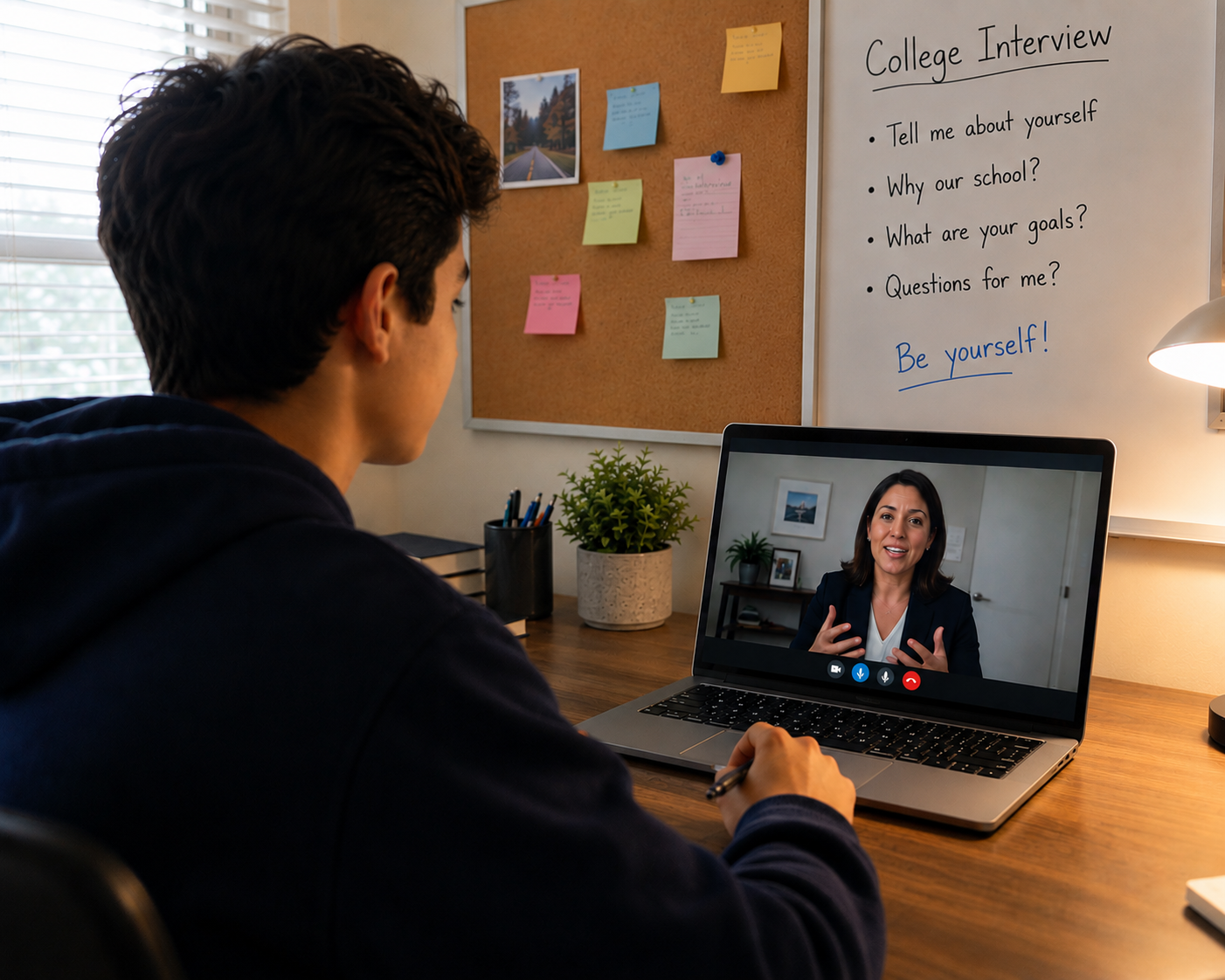
College Admissions Interviews: A Guide for International Students
.S. college admissions interviews are one of the most misunderstood aspects of the admissions process for international students.
With every university following its own policies, it can be difficult to know which opportunities matter and whether completing an interview will strengthen your application. Whether an interview is worth your time and investment depends on your college list, where you're applying from, and whether the interview will add something meaningful to your application.
Here's what every international applicant should know.
U.S. college admissions interviews are one of the most misunderstood aspects of the admissions process for international students.
With every university following its own policies, it can be difficult to know which opportunities matter and whether completing an interview will strengthen your application. Whether an interview is worth your time and investment depends on your college list, where you're applying from, and whether the interview will add something meaningful to your application.
Here's what every international applicant should know.

Do International Students Have to Interview for U.S. Colleges?
The short answer is no.
Most U.S. colleges do not require interviews for international undergraduate applicants. Instead, colleges may offer or accept one of three interview options:
An interview with an admissions officer
An interview with an alumni volunteer
A third-party interview through InitialView or Vericant
Colleges such as MIT and Harvard offer interviews to as many students as possible, while most colleges don't offer interviews at all. Some colleges, such as Brown, offer students the opportunity to submit their own video introductions instead. Others, such as Bennington, will send an interview request if they would like to ask additional questions.
Even when interviews are available, they're usually considered optional or recommended, rather than required.
That's why it's important to understand each college's policy before deciding whether to schedule one.
Why Do Colleges Offer Interviews?
For international applicants, interviews give admissions officers another opportunity to get to know the person behind the application. They help colleges understand:
Your communication style and level of English proficiency
Your academic and extracurricular interests
Your motivation for studying in the U.S.
Your personality and intellectual curiosity
Admissions officers are not looking for perfect English or memorized answers. They're looking for thoughtful, authentic conversations.
The Three Types of Interviews
Alumni Interviews - Many selective colleges offer interviews with alumni volunteers. These conversations are typically informal and focus on your interests, goals, and reasons for applying.
Admissions Interview - Some colleges offer interviews directly with members of the admissions office. These are usually conducted virtually and may be slightly more evaluative than alumni interviews.
InitialView and Vericant - When alumni or admissions interviews aren't available, many colleges accept third-party interviews through InitialView or Vericant. Instead of interviewing separately for multiple universities, you complete one professional interview that can be shared with participating colleges.
Both platforms include:
A live interview
Questions about your academics and activities
A recording that colleges can review
A proctored writing sample -students respond to a prompt in 20-30 min.
InitialView vs. Vericant
Families often ask me which platform is better. The truth is that neither is universally better. The right choice depends on the colleges you're applying to and which platform they recommend. Always check the admissions website for each college on your list before scheduling an interview. A big difference between the two platforms is that InitialView’s interview is more conversational, while Vericant is more structured and includes a picture description. Vericant provides colleges with a score of your English skills (Spoken English Evaluation), while InitialView does not.
Should You Complete One?
This is where personalized advice matters. I don't recommend interviews simply because they're available. Instead, we consider questions such as:
Will colleges actually review InitialView or Vericant?
Will the interview strengthen your application?
Are you comfortable communicating in English in an interview setting?
Is the cost worthwhile for your college list?
For some students, an interview is an excellent opportunity to showcase their personality and communication skills. For colleges that offer alumni or admissions interviews, you have an opportunity to demonstrate your interest in the school while allowing them to get to know you better.
Every student's application strategy should be individualized.
Tips for a Successful Interview
The strongest interviews don't come from students who memorize answers.
Instead:
Be prepared, but conversational
Share stories rather than reciting your résumé
Let your curiosity and enthusiasm come through
Don't be afraid to pause before answering a question
Admissions officers want to meet the real you—not a rehearsed version of you.
Final Thoughts
A college interview won't determine your admission on its own. But when used strategically, it can help admissions officers better understand the thoughtful, motivated student behind the application.
At ACM College Consulting, I help students develop an admissions strategy that reflects their individual strengths—not a one-size-fits-all checklist. That means deciding whether an InitialView or Vericant interview is worthwhile, preparing for alumni or admissions interviews, and helping students communicate their stories with confidence and authenticity.
If you're applying to U.S. colleges from abroad and aren't sure whether an interview should be part of your admissions strategy, I'd love to help. Together, we can build an application that highlights not only what you've accomplished, but who you are.
Notes:
Some schools such as Claremont McKenna prefer InitialView
Harvard and Duke are two of the schools which offer alumni interviews to many students, but not all. It is based on interviewer availability. If offered, they highly recommend you do it.
Georgetown requires an interview unless they are not offered in your region. They will provide you with the contact information for an interviewer in your area if available. Then, it is your responsibility to contact them and schedule the interview.

A Week in My Life as a College Consultant

People often assume that college consulting is all about applications and essays. While those are certainly important, they are only one piece of a much bigger picture. A typical week in my work involves supporting students at every stage of their educational journey, from 9th graders just beginning to think about university plans to graduates preparing for their next chapter. No two weeks are ever the same.
This week, I helped a sophomore create her first resume, which gave us a complete picture of her activities and accomplishments and helped us identify opportunities to deepen her interests, build meaningful experiences, and clarify her academic and career goals over the coming years. I love getting to know my students better through this process and helping them uncover what they genuinely enjoy, what sparks their curiosity, and where they may want to focus their energy in the future.
I also worked with graduating seniors who are preparing for university this fall. Together, we explored housing options in the UK and the Netherlands, compared costs and locations, and continued searching for additional scholarship opportunities. My work doesn't end once a student chooses a university—I continue to support them through the transition, helping them prepare for a successful start to this exciting new chapter.
For my rising seniors applying to U.S. universities, application season is already underway. We have begun brainstorming Common App essays, refining activity descriptions, finalizing last testing plans, and working on application strategies that highlight their unique stories. Beyond applications, I helped several students plan campus visits across Europe and the United States.
Outside of student meetings, you'll find me touring campuses, attending webinars, and connecting with colleagues across the admissions world. As an active member of the Higher Education Consultants Association and the Independent Educational Consultants Association, I have the opportunity to exchange ideas and insights with other consultants and admissions professionals on a daily basis. I am constantly learning, and being part of these professional communities helps me bring the latest information and best practices to the students and families I work with. Staying current is a must!
College consulting is about much more than helping with applications. It's about supporting thoughtful planning and informed decision-making, and helping students build a path that is right for them. That's the work I have the privilege of doing every day.

What International Students Need to Know About SAT/ACT Testing in 2026
In my work with international students and globally mobile families, testing policies are one of the most common areas of confusion in the U.S. admissions process. Over the past several years, standardized testing policies in U.S. college admissions have changed dramatically. Many universities moved to test-optional policies during the pandemic, leaving families wondering whether SAT or ACT scores still matter. Although many universities still maintain test-optional policies, some selective institutions such as Stanford, Penn, and Harvard have begun reinstating SAT or ACT requirements. At the same time, more students are choosing to submit scores, even when testing is optional.
Although many universities continue to offer test-optional admissions, recent data suggests that standardized testing is regaining importance in an increasingly competitive application landscape.
Are U.S. Colleges Requiring the SAT or ACT Again?
Some are.
A growing number of universities have begun reinstating testing requirements, particularly more selective institutions. Others continue to use test-optional policies, meaning students can choose whether or not to submit scores.
However, “test-optional” does not necessarily mean “test-irrelevant.”
This distinction is especially important for international students.
In many cases, strong SAT or ACT scores can still strengthen an application, particularly for students applying from:
unfamiliar educational systems
countries where grading systems are difficult to compare internationally
systems focused heavily on final exams
Test scores can help provide additional academic context.
What Happened During the 2025–26 Application Cycle?
The latest Common App data revealed several important trends:
Applications increased 5% year-over-year
The average student submitted 6.59 applications
First-generation applicants increased by 13%
International applications decreased by 9%
One of the most notable shifts involved standardized testing.
Although only around 5% of Common App institutions currently require SAT or ACT scores, the number of students submitting test scores increased substantially this year.
Nearly 784,000 students submitted test scores during the 2025–26 cycle — an 11% increase from the previous year.
This marked the first time since before the pandemic that more students applied with test scores than without. The trend suggests that many applicants increasingly believe strong scores may still strengthen an application — even at test-optional schools.
Why Are More Students Submitting Scores Again?
There are several likely reasons.
Increased Competition
Application numbers continue to rise, especially at selective universities. As more students apply to more schools, applicants are looking for additional ways to distinguish themselves academically.
Greater Clarity Around Testing
In the early years of test-optional admissions, many students were uncertain whether scores truly mattered. Now, several admissions cycles later, families and counselors have more data. It has become increasingly clear that submitting strong scores can strengthen an application.
New ACT Changes International Students Should Know About
The ACT has changed significantly over the past year. It is much shorter, now taking closer to two hours instead of three. One of the biggest changes is that the ACT Science section is now optional.
Under the new format:
the composite ACT score will be based only on English, Math, and Reading
students who choose to take Science will receive a separate Science score and STEM score
This has created some confusion because universities are still determining how they will evaluate the optional Science section.
At the moment, only a relatively small number of universities specifically require or recommend the ACT Science, although policies vary by institution and intended major. For students applying to STEM programs, taking the Science section may be worthwhile.
The ACT is only available in digital format outside of the U.S. Unlike the Digital SAT, however, it is not adaptive. All students still receive the same questions in the same order regardless of performance during the exam.
What This Means for Students
The changing testing landscape can make planning more complicated.
Students should pay close attention to:
whether universities require testing
whether ACT Science is recommended for intended majors
superscoring policies
scholarship requirements tied to testing
Should International Students Take the SAT or ACT?
The answer depends on the student, their academic profile, and the universities they are considering.
In general, testing may still be worth considering for students who:
are applying to highly selective universities
have strong testing ability
come from less familiar educational systems
want to strengthen academic comparability
are applying for merit scholarships
Students with weaker scores, however, may still benefit from applying test-optional at many institutions.
There is no universal answer.
Final Thoughts
The U.S. admissions landscape continues to evolve, and testing policies remain one of the most confusing areas.
While many universities still allow students to apply without scores, recent application trends suggest that more students submit them.
Testing strategy is never one-size-fits-all. In my work with students, testing strategy is always personalized based on the student’s academic profile, strengths, university goals, and the specific admissions policies of the schools they are considering.
Students planning ahead may also find my U.S. College Application Timeline for International Students helpful.

Financial Aid for International Students at U.S. Colleges
For many international students, the cost of studying in the United States can feel like the biggest obstacle. While financial aid for international students at U.S. colleges does exist, it’s important to understand how admissions and funding really work — especially when financial need is involved.
Do U.S. Colleges Offer Financial Aid to International Students?
Yes, many U.S. colleges provide institutional scholarships and financial aid for international students. The financial aid policies and amounts vary significantly from college to college and between state schools and private colleges. For example, public universities typically do not offer need-based aid and award limited merit aid, while private colleges offer more. It is important to research financial aid policies and availability at each college when building your list.
Need-Aware Admissions for International Students
Most U.S. colleges are need-aware for international applicants, meaning a student’s ability to pay can impact the admissions decision. In other words, applying for financial aid may make admission more competitive at many schools. Only a small number of U.S. colleges are truly need-blind for international students, which is why strategic school selection is critical. Schools that are need-blind and/or offer significant financial aid for international students are some of the most competitive for admission.
Types of Financial Aid Available
International students may receive:
Merit-based scholarships, awarded for academic achievement, leadership, or special talents
Need-based institutional aid, offered by colleges with budgets specifically for international students
Because funding is limited, students requesting significant financial aid must present especially strong academic profiles and applications.
Proof of Finances and the Student Visa Process
In addition to admissions, proof of financial resources is a required part of the U.S. student visa process. Students must show they can cover tuition and living expenses (through personal funds, scholarships, or a combination) in order to receive the Form I-20 and apply for an F-1 student visa. Here is a sample of what this form looks like. This makes understanding true affordability even more important early in the process.
Why Expert Guidance Matters
Navigating need-aware admissions, scholarships, and visa financial requirements can be overwhelming. At ACM College Consulting, we help international students:
Build realistic, financially strategic college lists
Understand how requesting aid affects admissions decisions
Identify schools that support international students with funding
Prepare strong applications and manage financial documentation
Financial aid for international students in the U.S. is possible — but it requires honest financial planning, careful school selection, and strong applications. With the right strategy and expert support, students can maximize both admission and funding outcomes while avoiding surprises during the visa process.
Stay tuned for our next blog post about financial aid forms for international students.